
Points saillants des études de cas
Industrie : Mines et production d'énergie thermique
Application : Collecte de poussière sur concasseur et convoyeur
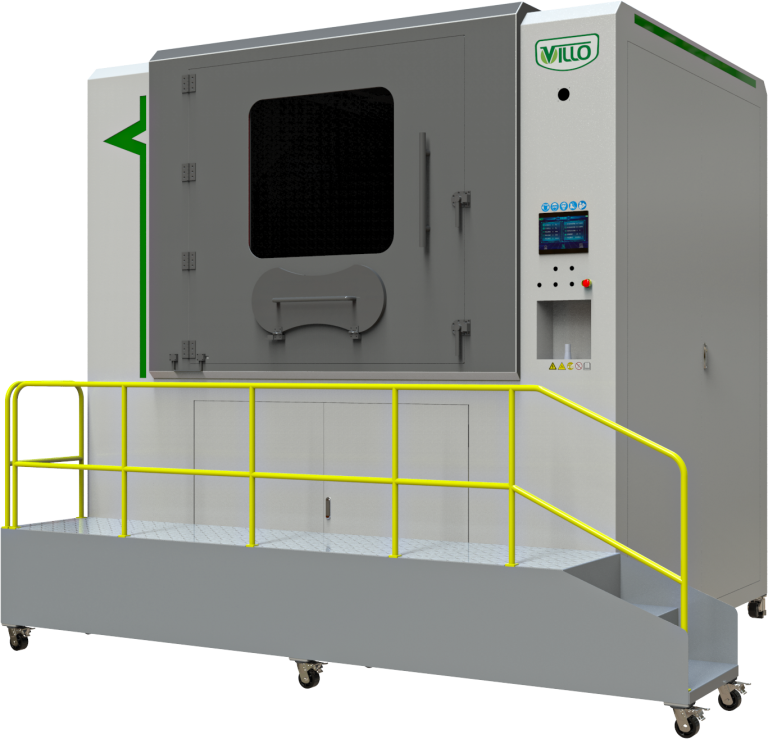
Modèle de dépoussiéreur : série VFO
Plage de débit d'air : 12 000 – 23 000 m³/h
Types de systèmes : Dépoussiérage localisé/Dépoussiérage centralisé
Fournisseur de solutions : Villo Technology
La poussière générée lors des opérations de concassage et de manutention des matériaux constitue un défi courant dans des secteurs tels que l'exploitation minière et la production d'électricité. Sans systèmes de contrôle des poussières appropriés, les particules en suspension dans l'air peuvent rapidement se propager dans les zones de production, affectant la fiabilité des équipements, la sécurité sur le lieu de travail et la conformité environnementale.
Pour relever ces défis, Villo a conçu plusieurs solutions de dépoussiérage adaptées aux systèmes de concasseurs dans différents environnements industriels. Les études de cas suivantes démontrent comment les systèmes de dépoussiérage ont été conçus et mis en œuvre en fonction de la disposition de l'usine, des modèles de génération de poussière et des exigences en matière de débit d'air.
Génération de poussière dans les systèmes de concassage
Les processus de concassage font partie des opérations les plus gourmandes en poussières dans les systèmes de manutention de matériaux en vrac. La poussière est généralement générée lors de :
- Alimentation des matériaux dans les concasseurs
- Processus de concassage et de fragmentation
- Points de transfert sur tapis roulant
- Déchargement et criblage des matériaux
Les particules générées sont souvent fines et facilement aéroportées, en particulier lors de la manipulation de matériaux tels que le charbon, le minerai ou les agrégats minéraux.
Si elles ne sont pas capturées efficacement, ces particules peuvent se disperser dans toute l’installation, provoquant :
- Mauvaise visibilité dans les zones de production
- Usure accrue des composants de l’équipement
- Risques pour la santé des travailleurs
- Non-respect des normes environnementales
Par conséquent, des systèmes de dépoussiérage correctement conçus sont essentiels au maintien d’un fonctionnement sûr et efficace de l’usine.
Défis techniques liés à la collecte de poussière de concasseur
La conception d'un système de dépoussiérage pour les applications de concasseur nécessite de relever plusieurs défis techniques.
Plusieurs sources de poussière
Les systèmes de concassage comprennent souvent plusieurs concasseurs et stations de transfert par convoyeur, chacun agissant comme un point d'émission de poussière distinct.
Charge de poussière élevée
Le concassage des matériaux génère de grands volumes de poussières particulaires, ce qui nécessite des systèmes de filtration capables de gérer une charge élevée de poussière sans perte de performances.
Exigences en matière de débit d'air et de pression statique
Les dépoussiéreurs doivent générer un débit d'air et une pression statique suffisants pour capturer la poussière en suspension avant qu'elle ne s'échappe dans les zones environnantes.
Aménagements d'usines complexes
Différentes installations nécessitent différentes architectures de dépoussiérage, en fonction de l'emplacement de l'équipement et de l'espace d'installation disponible.
En pratique, cela se traduit généralement par deux approches de conception :
- Systèmes de dépoussiérage localisés
- Systèmes de dépoussiérage centralisés
Solution d'ingénierie par Villo
En fonction des conditions du site et des exigences opérationnelles, Villo a conçu des systèmes de dépoussiérage en utilisant une combinaison de configurations localisées et centralisées.
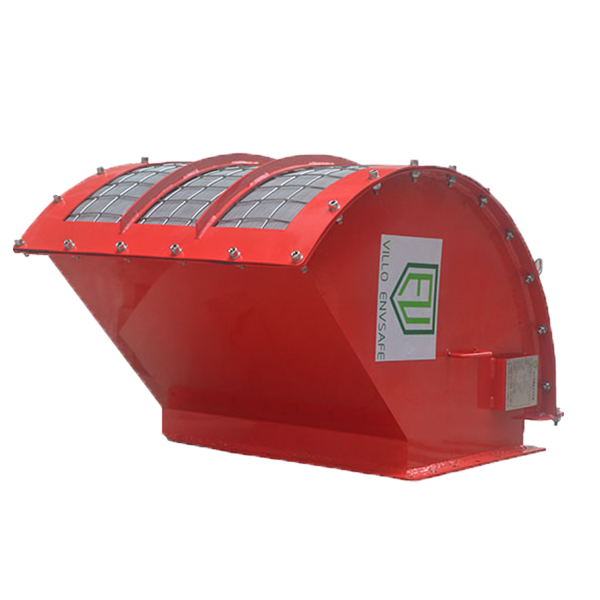
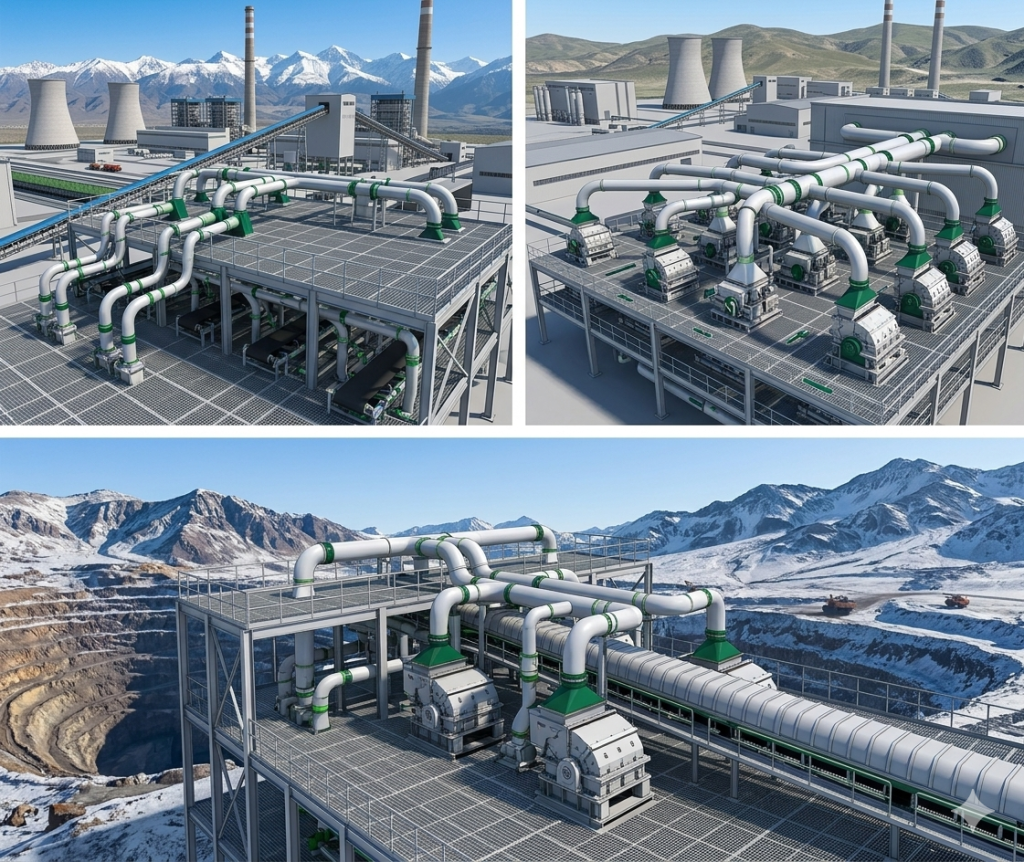
Les collecteurs localisés sont installés à proximité de sources de poussière individuelles telles que des convoyeurs ou des concasseurs, permettant une capture efficace au point de génération.
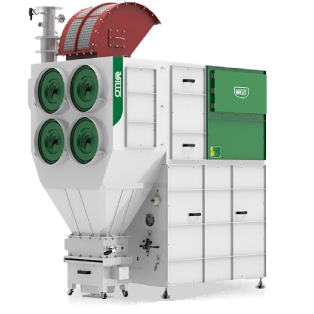
Les collecteurs centralisés relient plusieurs sources de poussière via des systèmes de conduits, permettant à une seule unité de filtration de desservir plusieurs machines.
Le choix entre ces configurations dépend de facteurs tels que :
- Nombre de points d'émission de poussières
- Capacité de débit d'air requise
- Espace d'installation disponible
- Considérations relatives à l'entretien
Projets d'études de cas
Cas 1 – Contrôle de la poussière des convoyeurs dans une centrale thermique
Lieu : Kirghizistan
Dans cette centrale thermique, les émissions de poussières étaient principalement générées au niveau des points de transfert des convoyeurs alimentant le système de concassage.
Conception du système
Pour capter les poussières à proximité de la source, des collecteurs localisés ont été installés directement à proximité des points de transfert des convoyeurs.
Équipement : Dépoussiéreur VFO 3-12
Paramètres techniques
| Paramètre | Valeur |
| Flux d'air | 12 000 m³/h |
| Pression statique | 3500 Pa |
| Application | 4 collecteurs pour 2 convoyeurs |
Cas 2 – Collecte de poussière centralisée pour une installation multi-concasseur
Lieu : Chine
Cette installation de concassage fait fonctionner 12 concasseurs simultanément, produisant une quantité importante de poussière dans toute la zone de traitement.
Conception du système
Au lieu d'installer des collecteurs individuels pour chaque concasseur, Villo a mis en place un système centralisé de collecte de poussière reliant tous les concasseurs à une seule unité de grande capacité.
Équipement : Dépoussiéreur VFO 4-16
Paramètres techniques
| Paramètre | Valeur |
| Flux d'air | 18 200 m³/h |
| Pression statique | 3111 Pa |
| Application | 12 concasseurs connectés à un collecteur |
La configuration centralisée simplifie la maintenance tout en fournissant un flux d'air suffisant pour plusieurs points de ramassage de poussière. Dépoussiéreur Villo pour cr
Cas 3 – Collecte de poussière de concasseur dans l’exploitation minière du cuivre
Lieu : Russie
Les environnements miniers impliquent souvent des opérations intensives continues et des charges de poussière élevées.
Conception du système
Les dépoussiéreurs de la série VFO ont été configurés pour gérer différentes configurations de convoyeurs au sein du système de concassage.
Équipement : Dépoussiéreur VFO 4-16
Paramètres techniques
| Paramètre | Valeur |
| Flux d'air (convoyeur unique) | 13 000 m³/h |
| Flux d'air (double convoyeur) | 23 000 m³/h |
| Pression statique | 3200 Pa |
Cette configuration a maintenu des performances stables de capture de la poussière pendant les processus de concassage et de transport des matériaux.
Méthodologie de conception du système de dépoussiérage
Lors de la conception de systèmes de dépoussiérage pour les applications de concasseurs, les ingénieurs suivent généralement plusieurs étapes clés.
1. Identifiez les points d’émission de poussière
La première étape consiste à identifier tous les principaux emplacements de production de poussière, notamment :
- Points d'alimentation du concasseur
- Zones de déchargement du concasseur
- Stations de transfert par convoyeur
Chaque point doit être équipé de hottes de dépoussiérage appropriées.
2. Calculer le débit d'air requis
Les besoins en débit d'air dépendent de facteurs tels que :
- Type de matériau
- Distribution granulométrique
- Conception du capot
- Exigences de vitesse de capture
Le débit d'air typique pour les systèmes de dépoussiérage des concasseurs varie de 10 000 à 25 000 m³/h, selon l'échelle du système.
3. Conception du système de conduits
Le réseau de conduits doit être conçu pour garantir une vitesse d'air appropriée tout en minimisant les pertes de charge. Les principales considérations comprennent :
- Diamètre du conduit
- Vitesse de l'air à l'intérieur des conduits
- Nombre de virages et de branches
Le maintien d’une vitesse de conduit adéquate aide à prévenir l’accumulation de poussière à l’intérieur du système.
4. Sélectionnez la capacité du dépoussiéreur
La sélection du dépoussiéreur est basée sur :
- Capacité de débit d'air requise
- Exigences de pression statique
- Caractéristiques de chargement de poussière
Un dimensionnement approprié garantit des performances de filtration stables en fonctionnement continu.
Résultats et avantages opérationnels
Les systèmes de dépoussiérage mis en œuvre ont apporté plusieurs améliorations opérationnelles.
Suppression efficace de la poussière
Les émissions de poussières des concasseurs et des convoyeurs ont été considérablement réduites.
Environnement de travail amélioré
Des conditions d’air plus propres ont amélioré la visibilité et la sécurité sur le lieu de travail.
Performances de filtration stables
Une conception appropriée du flux d'air et de la pression garantit une capture fiable de la poussière, même sous de lourdes charges de poussière.
Complexité de maintenance réduite
Les systèmes centralisés simplifient la maintenance dans les grandes installations multi-concasseurs.
Conclusion
Les opérations de concasseur dans les environnements miniers et de production d’électricité génèrent d’importantes poussières, nécessitant des systèmes de collecte de poussière soigneusement conçus.
Grâce à une conception de flux d'air optimisée et à des configurations de système flexibles, Dongguan Villo Technology Inc. a fourni des solutions de dépoussiérage capables de maintenir des performances fiables dans des conditions industrielles exigeantes.
Ces projets démontrent comment les systèmes de collecte de poussière localisés et centralisés peuvent être appliqués efficacement pour améliorer le contrôle de la poussière dans les opérations de concasseur.
Apprendre encore plus
Apprenez-en davantage sur les solutions de dépoussiérage industriel de Villo pour les systèmes de manutention :